
Spark plugs are small parts that do a very important job. They help ignite the air and fuel mixture inside the engine so your car can start, run smoothly, and make the power it is supposed to. At our shop, we talk about spark plugs a lot because they are one of those maintenance items drivers often forget about until the car starts acting up.
The tricky part is that spark plugs do not usually fail all at once in some dramatic way. Most of the time, they wear down gradually. The engine may start a little slower, feel a little rougher, or lose a bit of efficiency before the driver fully notices what is happening. That is why spark plug replacement tends to get pushed down the list. The car still runs, so it feels fine enough for now. But fine enough is not the same thing as healthy.
Knowing when to replace your spark plugs can help you avoid rough performance, poor fuel economy, hard starts, and bigger ignition problems down the road. The answer depends on your vehicle, your driving habits, and whether the plugs are already starting to leave warning signs.
What Spark Plugs Actually Do
Every time your engine runs, the spark plugs create the spark that starts combustion inside each cylinder. That process happens constantly while the engine is running. A lot of drivers are surprised when they think about how much work such a small part is doing.
Because spark plugs are exposed to heat, pressure, and combustion over and over again, they wear out with time. The electrodes gradually wear down, deposits can build up, and the plug no longer fires as cleanly or efficiently as it should. Once that starts happening, engine performance often begins to slip in small ways before the problem becomes obvious.
There Is No One Mileage Number For Every Car
One of the most common questions we hear is how many miles spark plugs are supposed to last. The honest answer is that there is no single number that fits every vehicle. Some spark plugs are designed to last much longer than others. Older vehicles and some standard plugs may need replacement sooner, while many newer vehicles use long life plugs that can go much farther.
We always tell customers to start with the owner’s manual. The manufacturer’s service interval is the best baseline because it is based on the engine design and the spark plug type used in that vehicle. At our shop, we do not like giving one blanket mileage number because it can be misleading. Some cars are overdue much earlier than the owner realizes. Others still have useful plug life left when the driver assumes it must be time just because of a number they heard years ago.
Driving Conditions Can Change The Timing
Even if your vehicle has a published service interval, real world driving still matters. A car that spends its life on easy highway miles may wear spark plugs differently than one that sees constant short trips, heavy traffic, long idling, or a lot of stop and go driving.
If the engine is under more stress, or if the vehicle has other issues affecting combustion, spark plugs may start showing wear earlier than expected. That does not always mean they need to be replaced far ahead of schedule, but it does mean mileage alone is not the whole story.
Signs Your Spark Plugs May Need Replacement
A lot of spark plug issues show up as drivability complaints before anyone is thinking specifically about spark plugs. The engine just does not feel as smooth or responsive as it used to.
Common signs include:
- Hard starting
- Rough idle
- Hesitation during acceleration
- Reduced fuel economy
- Engine misfires
- Sluggish performance
These symptoms do not automatically prove the spark plugs are the problem, but they definitely move them higher on the list. At our shop, if a vehicle is due for spark plugs and showing these kinds of symptoms, they become part of the conversation right away.
Hard Starting Is One Of The Most Noticeable Clues
When spark plugs wear down, the engine may have a harder time igniting the air and fuel mixture cleanly, especially during startup. That can make the engine crank longer or feel less eager to fire up than it used to.
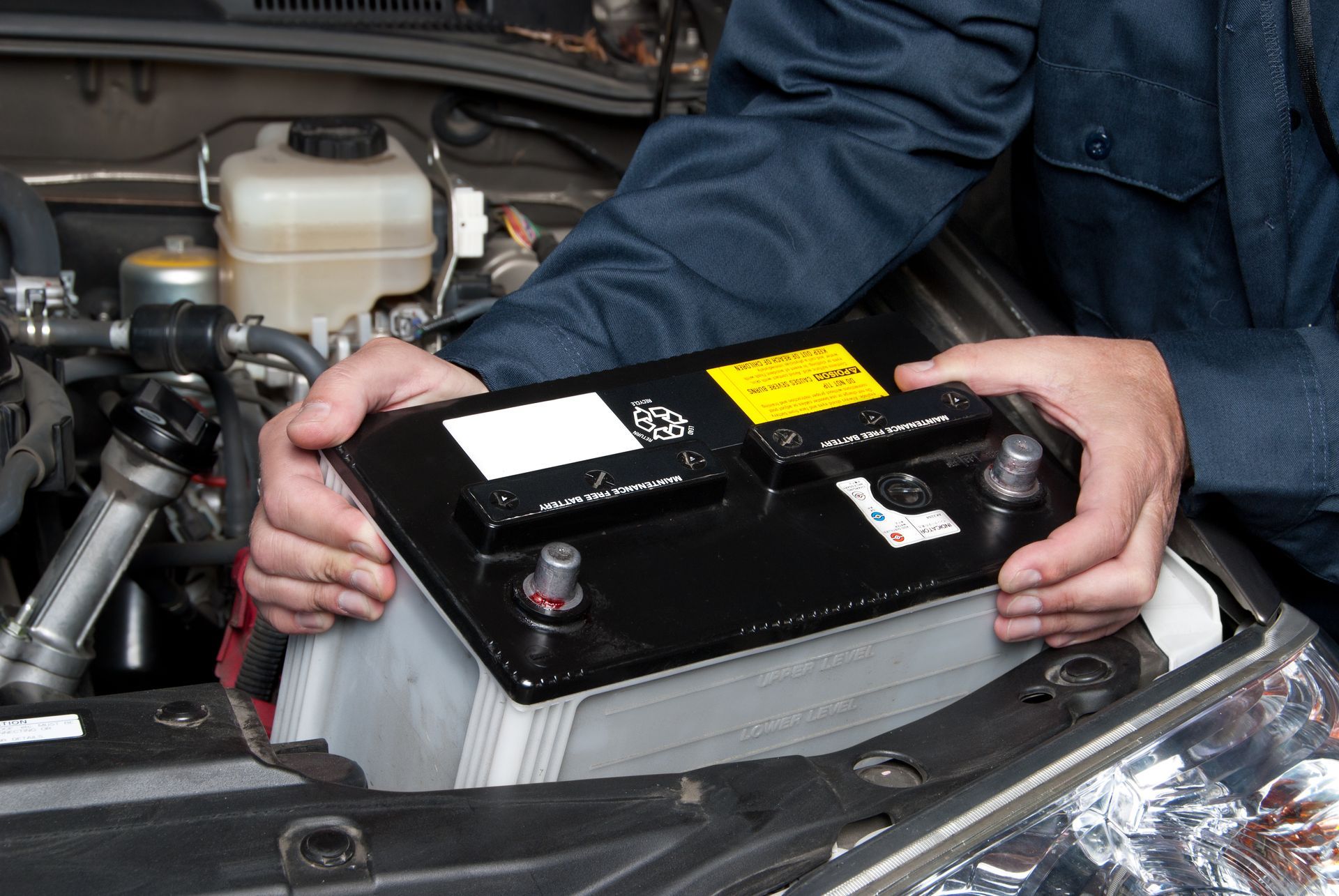
A lot of drivers first notice spark plug trouble during morning starts or after the car has been sitting for a while. They may assume it is only the battery at first, but if the battery checks out and the engine is still slow to start, the spark plug condition deserves attention.
Rough Idle And Hesitation Can Follow
Worn spark plugs often cause the engine to run less smoothly, especially at idle or during light acceleration. You may feel a slight shake, unevenness, or stumble that was not there before. Sometimes the issue is subtle enough that drivers get used to it until the plugs are replaced and the engine suddenly feels much smoother again.
Hesitation can also show up when you press the gas and the vehicle feels a little slow to respond. That does not always mean the spark plugs are the only issue, but they are often part of the diagnosis when they are overdue.
Fuel Economy Can Drop Quietly
Spark plugs that are not firing efficiently can make the engine work harder to do the same job. That often shows up as a slow drop in fuel economy. A driver may not notice it immediately because the change is gradual, but over time it can become pretty clear that the car is using more gas than it used to.
When someone says the vehicle feels a little less efficient and the spark plugs are due based on mileage or age, we take that seriously. It is one of the more common ways overdue plugs cost drivers money without creating one huge obvious symptom.
Misfires Are A Bigger Warning
Once spark plugs get worn badly enough, the engine may begin to misfire. A misfire means one or more cylinders are not firing the way they should. That can cause shaking, poor performance, and in some cases a check engine light.
Driving too long with an active misfire can put extra strain on the ignition system and may even risk damage to the catalytic converter if the issue is severe enough.
Spark plugs are not the only cause of a misfire, but they are a very common one, especially when they are overdue or visibly worn.
Why Waiting Too Long Is Not Worth It
A lot of drivers wait until the symptoms become strong enough to force the issue. We understand why. The car still runs, and spark plugs are not something most people see or think about day to day. But waiting too long can create more problems than necessary.
Old spark plugs can lead to poor performance, lower fuel economy, harder starting, and extra stress on ignition components like coils. In some cases, neglected plugs can also become harder to remove if they stay in place far beyond their service interval.
From our perspective, replacing spark plugs on time is one of those smart maintenance moves that usually saves money and frustration compared with waiting for the engine to complain loudly enough.
The Best Time To Replace Them
The best time to replace your spark plugs is before worn plugs start creating bigger drivability problems. For most drivers, that means following the service interval in the owner’s manual and paying attention to symptoms if the engine starts acting differently sooner than expected.
If your car is due for spark plugs or the engine is not running as smoothly as it should, bring it to Neil's Garage. We can inspect the ignition system, check the plug condition, and help keep your vehicle starting, idling, and accelerating the way it should. Call us today or stop by soon!
FAQs
Can bad spark plugs make my car fail an emissions test?
Yes, they can. If spark plugs are worn enough to cause incomplete combustion, misfires, or poor engine efficiency, emissions can increase.
Should all spark plugs be replaced at the same time?
In most cases, yes. Since the plugs in the engine usually wear at a similar rate, replacing them as a full set is the better move. It helps keep performance consistent across all cylinders and reduces the chance of one old plug causing trouble soon after one new plug was installed.
Can I still drive with worn spark plugs for a while?
You may be able to, but it is not a great habit. A car with worn spark plugs may still run, but performance, fuel economy, and reliability usually suffer.